
Older brick homes
Most of our pointing calls come from older brick homes, where years of rain have washed the joints back. We see them in Columbia, Jefferson City, Fulton, Moberly, Boonville and the cities nearby.
Mortar sanding out of the joints or cracking along the brick? We clear out the worn mortar and repoint so your wall sheds water again.
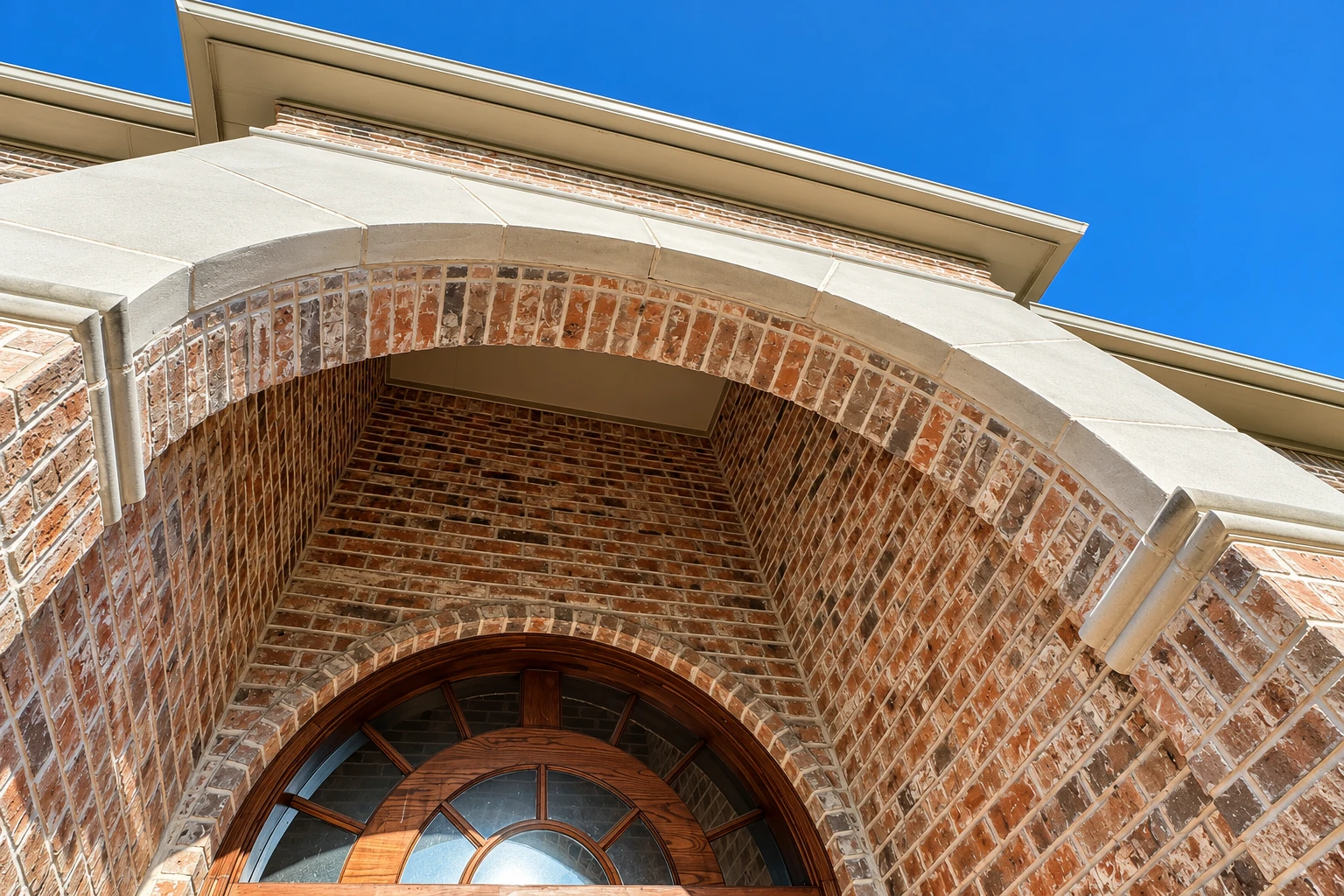
Brick pointing in Columbia means our crew at Blockworks Columbia Concrete and Masonry removes the worn mortar from the joints of your brick wall and packs in new mortar, so water stays out and the brick stops working loose.
Most calls start with sand on a windowsill or a joint you can scrape out with a key. The price depends on how much wall needs it, how deep the joints are worn, whether we need scaffolding to reach it, and whether any brick has to be repaired before we point. The schedule turns on the weather, because fresh mortar needs mild days to set, and on any brick repair that has to come first. I come out myself, look at the wall and write the estimate, so you get a figure for your own house instead of a guess.
I look at why the joints failed before anybody picks up a trowel, because if the cause is still there, the new mortar wears out the same way the old did.
We match the color, texture and joint shape of your old mortar, so the repointed wall looks like it was always that way instead of a patch.
I'd rather tell you to point the one worn side or the chimney and leave sound joints alone than sell you the whole house, since good mortar doesn't need replacing yet.
First we figure out why the joints wore out, whether it's water spilling off a roof edge, a leaky gutter or plain age, and fix what we can so the new mortar isn't fighting the same problem. If the brick itself is cracked, loose or flaking, we repair that first and point after, because new joints around a bad brick won't hold. Then the crew removes the old mortar to a sound, even depth, clears out the dust and dampens the brick so it doesn't pull the water out of the new mix too fast. We mix the new mortar to match the old or a little softer, because mortar is supposed to be the part that gives, and when it's harder than the brick, the brick takes the stress and its face flakes off. We pack the joints, tool them to the shape of your old ones and brush the wall clean. A lead mason runs the crew on site, and I stop by to check the work and walk the finished wall with you.
Pointing often comes up alongside other work. Cracks that run through the bricks themselves, or a wall that's starting to lean, can mean the house is moving, and that calls for foundation repair before anybody touches the joints. Chimneys take the worst weather on the house, so if the crown is cracked or the top courses are loose, we handle that as chimney repair and point the stack while we're up there.
Most of our pointing calls come from older brick homes, where years of rain have washed the joints back. We see them in Columbia, Jefferson City, Fulton, Moberly, Boonville and the cities nearby.
A chimney stands out in wind, rain and freezing weather on every side, so its joints usually wear first and can let water into the attic or the flue.
The lowest courses of a brick wall stay wet longest after a storm, so the joints there soften sooner. Pointing them keeps water from working into the wall and the basement behind it.
Freestanding brick walls and planters take rain on both faces and the top, so their joints wear faster than a house wall's. Repointing usually saves a wall that still stands straight.
Send us a few details and we'll get back to you within one business day to set a time. I'll come out, look at your joints and write a free estimate, with no obligation.
A close shot of the worst joints and one of the whole wall help me see ahead of time whether this looks like pointing alone or brick repair too.
Tell us about how long and tall the wall is and whether it goes above the first floor, since reaching high work changes the setup and the price.
I'm the one who comes out and writes your estimate, so the person telling you what the wall needs is the same one who checks the crew's work later.
These examples show mortar colors, joint shapes and brick textures we can talk through when matching new pointing to your walls.
Straight answers to what people usually ask about worn mortar joints, the cost, the timing and choosing who does the work.
Your brick probably needs repointing if the mortar has worn back more than 1/4 inch from the face, crumbles, has gaps, or shows hairline cracks or cracks where it meets the brick. You can check for these signs yourself, and the brick industry's repointing guide walks through them. Snap photos of what you find for your estimate request.
Repointing is the right repair when the damage stops at the mortar joints. Leaks, stair-step cracks along the mortar, loose or cracked bricks and flaking brick faces mean the brick itself needs work first. Whatever caused that damage has to be found and fixed before anyone repoints, or the new joints crack the same way.
Across the US, brick repointing usually costs about $3 to $20 per square foot of wall. Walls taller than 8 feet that need scaffolding cost more per square foot than lower ones, and brick repairs or a hard-to-match mortar add to the job. Your own figure comes from the estimate I write after seeing the wall.
Late spring through early fall is the time to repoint, with air temperatures staying between 40°F and 90°F for 24 hours before the work and 72 hours after. Around Columbia, there's about a 10% chance of a freeze before October 6 and even odds by October 23, so book early in the season if you want it done this year.
Mortar joints typically last more than 25 years, while the brick may well last more than 100. So pointing is upkeep that comes around every so often over a brick house's life, not a one-time fix, and a job matched to the old mortar leaves the wall in good shape for the next round.
Not necessarily, because repointing takes its own skill, and an excellent mason may not be qualified for it. Ask any contractor about their repointing work in particular before you choose. We're licensed and insured, and I learned every joint by hand under an old mason before I ever ran a crew.
Call (573) 530-1031 or use the form, since a look now can catch a small patch of bad joints before water gets behind the brick.