
Worn joints on older homes
Older brick homes are most of the repair calls we get, and their joints usually wear first where rain hits hardest, long before the brick itself is anywhere near worn out.
Crumbling joints, gaps or stair-step cracks in your brick? We find what caused them, then repair the wall so the new work blends in.
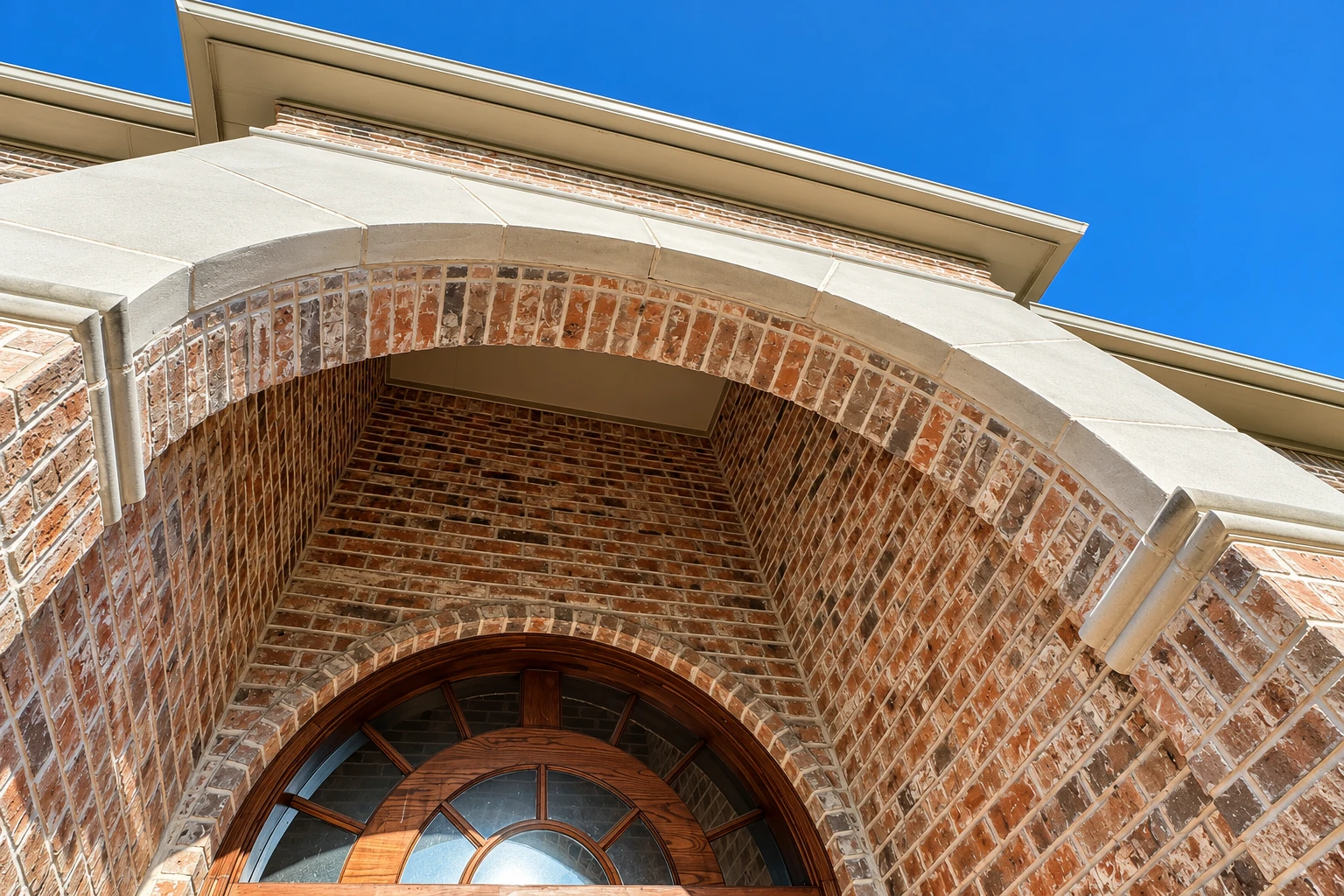
Brick repair in Columbia, MO usually means repointing, where we cut out the worn mortar between your bricks and pack in fresh mortar so the joints stop letting water into the wall.
Most calls I get start with someone noticing sandy mortar at the foot of a wall, a joint that's pulled back from the brick, or a crack that climbs the wall like a staircase. What it costs comes down to how much wall needs new joints, how high it reaches, how deep the old mortar has worn and how closely the color has to match. The schedule turns on the weather and on what we find once the old joints are out. I'll come out, look at the wall with you and give you a free estimate with your own figure on it. We're based in Columbia and work in Jefferson City, Fulton, Moberly, Boonville and plenty of other cities around them.
When I come out, I look at why the joints failed before anyone picks up a trowel, because new mortar over a problem that's still moving just cracks again.
We match the mortar color and the shape of the joints to what's already on your house, so the repaired section looks like it's been there all along.
If a few joints are the only trouble, I'll tell you that instead of selling you a whole wall, and I'll show you what I saw so you can judge it.
When I see stair-step cracks, I look past the mortar to whatever moved the wall in the first place, and if it's more than a mortar problem, I'll tell you before we fix a single joint. Once we know the joints are the trouble, our lead mason runs the crew. They cut the worn mortar out to sound material, clean the joints so the new mortar has something to grab, swap out any brick whose face has cracked or flaked, then pack fresh mortar in layers and tool it to the same profile as the rest of the wall. We keep the new joints damp and out of hard sun while they cure, clean the brick face and haul off the dust and debris. I stop by during the work to check on it, and at the end I walk the wall with you.
Brick trouble often has a neighbor. If the drive up to your house has heaved or sunk along the foundation, the same crew lays driveway pavers, so we can look at both while we're there. And when a slope keeps sending soil and water toward the house, retaining wall construction can hold that ground back before it shows up in your brick.
Older brick homes are most of the repair calls we get, and their joints usually wear first where rain hits hardest, long before the brick itself is anywhere near worn out.
A crack that zigzags along the mortar lines can be an old settling mark or a sign the ground is still moving, so we look at the house around it before deciding on the repair.
When a brick's face has cracked or flaked off, we cut that brick out and set a replacement as close in size and color as we can find, then point it in.
A past repair in the wrong color or with hard gray mortar sticks out from the street, and we can cut it out and redo it so it sits with the rest of the wall.
We get back to you within one business day to set a time, then I come out, look at the wall with you and write the estimate, with no pressure and no obligation.
I come out myself to look at your wall and price the job, so the person writing the estimate is the one who knows what the repair actually needs.
We're licensed and insured, and our work is satisfaction guaranteed. I do the final walkthrough with you myself, so you see the finished wall with the person who priced it.
We've been doing brick, block and stone work since 2013, and repairs that blend in with the brick already on a house are what we're best known for.
Examples of joint profiles, mortar colors, brick patterns and paver layouts you can point to when we talk about your own wall.
Straight answers to what homeowners ask most about worn mortar, cracked brick and repointing before they call for an estimate.
Across the US, tuckpointing or repointing brick usually costs about $500 to $2,500 per 100 square feet, and that's the going range for the work, not a quote for your wall. Walls tall enough to need scaffolding cost more per square foot. Your own figure comes from the free estimate, once I've seen the wall.
Mortar worn back more than 1/4 inch, mortar that crumbles or has gaps, hairline cracks and cracks between brick and mortar are the signs the brick industry's repointing guide lists, so you can check your walls against it. A few fine cracks aren't always urgent, since cavity and veneer walls, the kind with an air space behind the brick, can handle some extra moisture.
New mortar should be the same strength as the original or weaker. Stronger mortar puts more stress where brick meets mortar and can damage the brick face, so ask any mason what they plan to use. Sand color and cement type both change the color, and a sample in a hidden spot on the wall lets you check the match.
Spring and fall are usually best, because one cost guide points to the steady daytime temperatures then as ideal curing weather for mortar. The same guide says emergency work in winter or a heat wave will likely cost more, so if your joints are worn but not failing, it pays to plan ahead.
Diagonal, stair-step cracks through brick or mortar can be one sign that swelling and shrinking soil has moved the foundation, and the odds rise the more of those signs a house shows. Much of Boone County is high shrink-swell clay, which changes volume between wet and dry spells and can flex a slab enough to separate brick veneer. That's why I check the ground before the joints.
Mortar joints typically last more than 25 years, while the bricks themselves may last well over 100. That means a brick wall may need its joints redone now and then over its life, so it makes sense to treat repointing as planned upkeep rather than a sign the house is failing.
Call (573) 530-1031 or use the form, and have photos of worn joints or stair-step cracks ready so I know where to look first.