
Front walk to the door
The walk from the driveway or sidewalk to your front steps carries the most feet and gets the most looks, so it's worth a little extra width and a smooth, even surface.
Tired of a cracked, heaved or muddy path to the door? We dig out, build a solid base, then pour concrete or set pavers.
Walkway construction in Columbia, MO starts with getting the ground ready by digging, grading and building a firm base. Then we pour concrete or set pavers on top, so you get a solid, even path from the drive or sidewalk to your door.
Most folks call us because an old walk has cracked or heaved, or because they're tired of a worn dirt track across the yard. The price comes down to the size and shape of the walk, concrete or pavers, any steps, any old walk we tear out, and the base. The base is a big share of the job, because ground that freezes and thaws needs deeper digging and a sturdier base to keep a walk from heaving, and how thick it goes depends on your soil, your drainage and how much foot traffic the walk carries. That matters here, since soils across Boone County carry a high shrink-swell rating, so the ground swells when it's wet and shrinks as it dries. We do the same work in Jefferson City, Fulton, Moberly, Boonville and plenty of other cities around Columbia. The schedule mostly turns on the season and on getting buried lines marked before we dig, and the estimate gives you the price for your own walk.
I learned the trade mixing mortar and hauling block for an old mason who made me do every joint by hand, then went out on my own. We've been in business since 2013, licensed and insured.
I want new work to look like it was always part of your house, so we pick paver colors, concrete finishes and lines that sit right against your brick, stone or siding.
If your old walk only has a few cracked pavers or one sunken section, I'll tell you so, because I'd rather do a small repair that works than sell you a new walk you don't need.
I start at your house by looking at the ground, where the water runs and how the walk will get used. Then I lay out how poured concrete and pavers each handle cracking and repairs, so you can pick the one that suits you. Once you've chosen, we get the underground lines marked, and our crew digs out the path and grades it so water runs off instead of sitting. Then we build and pack the base in layers, because that's the part you never see and the part that decides whether the walk stays even. After that we set the edges and lay the pavers, or we form, pour and finish the concrete, and we clean up the site when we're done. Our lead mason keeps the crew on it the whole way, and I stop by to check the work and walk the finished path with you.
A walk rarely stands alone. When it runs past a garden bed or up to the front of the house, a low border wall from our brick wall installation work can hold the soil back and tie the path to the house. Our stone masonry covers stone steps and edging when the walk climbs a slope or you'd like natural stone along it.
The walk from the driveway or sidewalk to your front steps carries the most feet and gets the most looks, so it's worth a little extra width and a smooth, even surface.
A side yard path keeps you off wet grass on the way to the gate, the trash cans or the garden. These paths are often narrow, so we plan the width around what you carry along them.
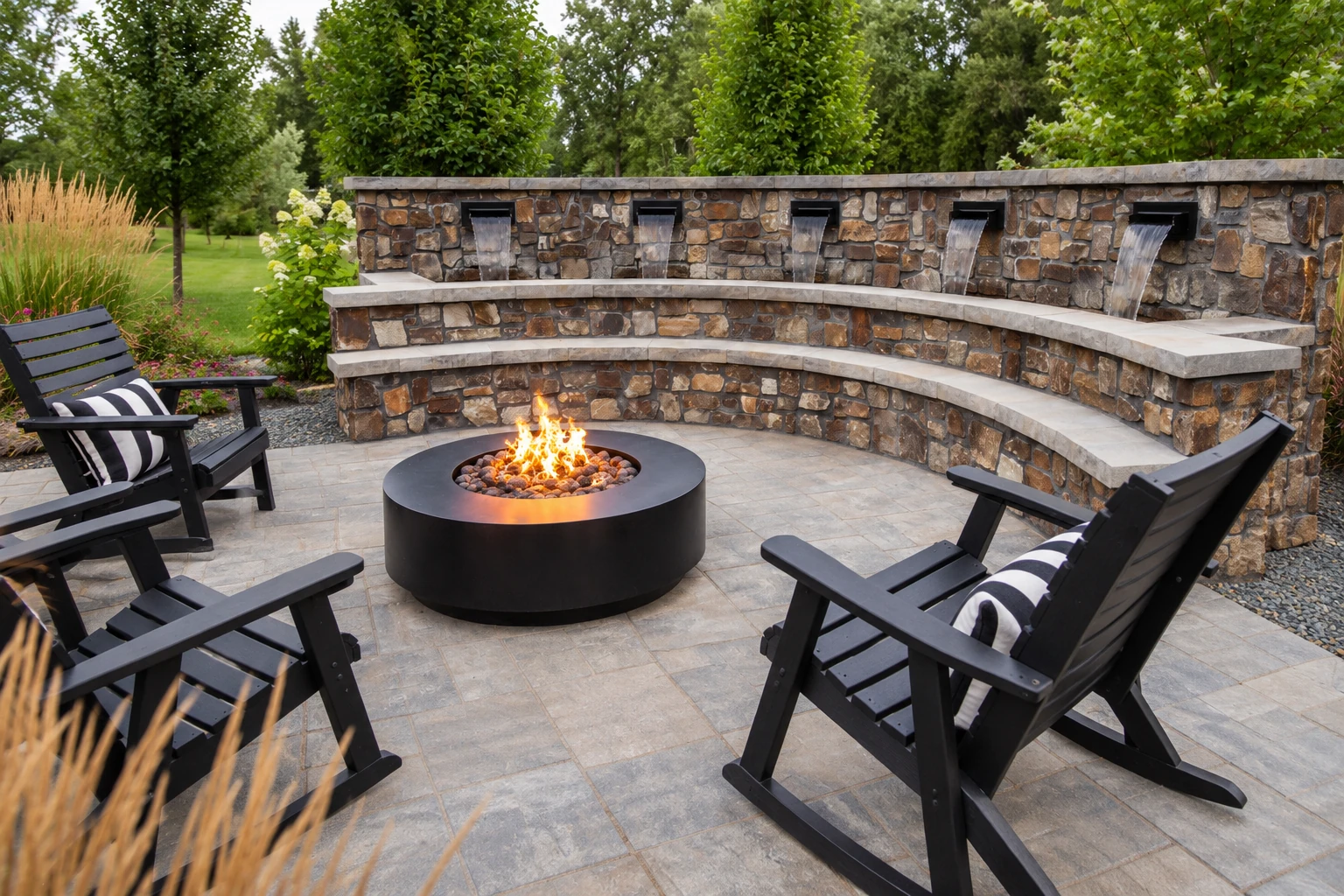
If you've got a patio, fire pit or outdoor kitchen out back, a walk from the back door gets you there without tracking mud, and we lay it so the two meet cleanly.
When an old concrete walk has cracked, sunk or tipped up at the joints, we tear it out and rebuild from the ground up, base and all, so the new path isn't sitting on the same trouble.
Send the form and we'll get back to you within one business day to set a time. I'll come out, look at your ground and measure the walk. The estimate is free, with no obligation.
Before I price anything, I check the soil, where the water goes and what's under any old walk, because a new walk that misses the cause of the old cracks just cracks again.
Our lead mason runs the crew on site, so you've got one person to ask while the work's underway. I stop by to check on it as the job goes.
When the path is done, I walk it with you before we call the job finished, because you should see the edges, joints and finish up close. Satisfaction guaranteed.
These photos show brushed concrete, paver patterns, stone edging and border walls you can point at when we talk about your own walk.
Here are straight answers to what people ask about cost, cracking, weather, digging rules and inspections before they start a new walkway.
A paver walkway with installation usually costs about $15 to $40 per square foot across the US, according to a national cost guide. That's the market's range, not our price. Where your walk lands depends on the pavers you pick, its size and shape, and how much base your ground needs, and I'll price your own walk when I come out to measure.
Pavers usually do. Poured concrete is more likely to crack over time from temperature swings or shifting ground, and a cracked paver can be pulled and replaced on its own, so repairs cost less and go easier. If you pick concrete, ask about a mix with tiny air bubbles spread evenly through it, because they give the concrete room to relieve pressure as it freezes.
It shouldn't. Industry guidance says the base material and the soil under it should be unfrozen when the base goes in, because a base packed over frozen ground can settle once it thaws. So if you want pavers, plan the job for a stretch when the ground isn't frozen, and we'll set the date around the weather.
Somebody does, and on our jobs that's us. Missouri's One Call Law requires whoever is digging to notify the Missouri One Call System before certain digging, so utilities can mark the buried lines. They have two working days after a locate request to mark them, so we make that call early and plan the dig date around it.
Plan on several days, because a new concrete walk takes that long to cure before it's ready for use, so keep off that stretch until then. If it's your only way to the front door, tell me at the estimate and we'll talk through another way in while it cures.
It changes which office handles building inspections. Properties inside the City of Columbia go through the city's office, and outside city limits Boone County's Inspections Division handles them. Before work starts, we check which office covers your address and take care of any permit paperwork the job calls for.
Call (573) 530-1031 or use the form with your walk's rough length and width, concrete or pavers, and whether you're inside Columbia city limits.