Buried lines marked before digging
One block maker's checklist says to arrange a utility locate, where buried lines get marked on the ground, before any digging starts, so nobody puts a shovel into a gas or power line.
Tired of a grill on wheels crowding the patio? We build a solid block base and counter that fits your grill and suits your house.
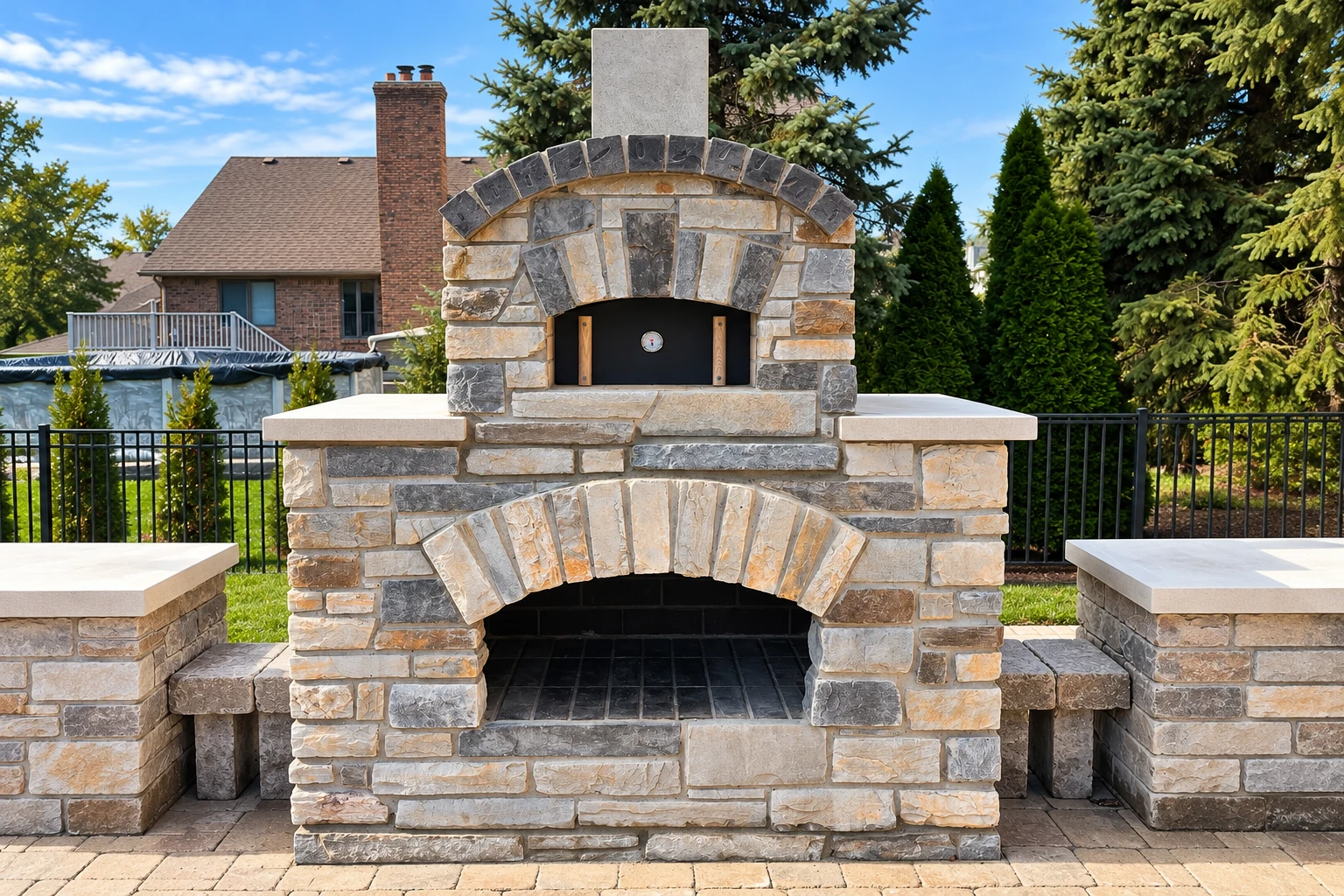
Outdoor kitchen masonry means building a concrete block base, which masons call CMU, and finishing it in stone, brick or stucco, so you end up with a solid counter that holds a built-in grill. Blockworks Columbia Concrete and Masonry builds them in Columbia, MO, Jefferson City, Fulton, Moberly, Boonville and plenty of other cities around them.
Most folks who call me have a patio, a grill they like and no real place to cook and set things down. The price comes down to how big the kitchen is, how many appliance openings it has, which finish you pick and how we get material to the spot, because carrying block and stone through a side gate by hand takes a lot more labor than unloading by machine in the driveway. The schedule turns on the masonry plus the countertop, which has its own wait for fabrication, so choosing your appliances and counter early keeps things moving. I come out, look at your yard and write up the estimate myself, so the number fits your layout.
I come out to look at your yard and talk through what you want, and I'd rather tell you a simpler setup will do the job than sell you a bigger one.
Our lead mason runs the work on site every day, and I stop by to check it and do the final walkthrough with you. Satisfaction guaranteed.
We've been laying brick, block and stone since 2013, and I want the face of your kitchen to look like it belongs next to your house, not like it was dropped there.
Before I lay out a single block, I ask you to pick your grill and any other appliances, because a box built around the wrong measurements has to be torn apart and rebuilt, and I'd rather get the openings right the first time. With those in hand, our crew lays out the base and builds the block walls with each opening sized to its appliance, leaving room for gas, water or power lines to come through. Then I walk you through stone, brick or stucco for the face. For stone, we fasten metal lath, a wire mesh, over the block, trowel on a scratch coat, a rough first layer of mortar that gives the stone something to grab, and set each stone in mortar. The counter goes on last, and we clean up the site before we leave.
An outdoor kitchen usually ties into the rest of the yard. If you need a path from the back door to the grill, our walkway construction work can carry the same stone or brick out to it, and a low brick wall can close in the cooking area or hold up a bar top.
One block maker's checklist says to arrange a utility locate, where buried lines get marked on the ground, before any digging starts, so nobody puts a shovel into a gas or power line.
One masonry guide says the final mortar choice has to follow the project documents and the code Columbia has adopted, so the city's code has a say in what holds your stone or brick.
Before work starts, we check which office covers your address and take care of any permit paperwork the job calls for, so you aren't left sorting that out on your own.
One block maker's checklist says to book a licensed gas fitter, electrician and plumber early. Their lines go in after the block is up and before the stone, and we're licensed and insured.
Send the form and we'll get back to you within one business day to set a time. I come out, look at the spot and write up a free estimate, with no pressure and no obligation.
Tell us the grill and any other appliances you've picked, model names if you have them, because the block openings get sized to them and the estimate is only as close as that list.
A quick drawing of where the grill, counter and any sink should sit, even on scrap paper, lets me see the shape and size before I come out to measure.
Let us know whether we can unload in the driveway or have to carry everything through a side gate, since that changes the labor and I want the estimate to reflect it.
These photos show stone, brick and stucco finishes and a few counter layouts, so you can point at what you like when we talk.
Here are the questions people ask me most about finishes, timing, grills, propane tanks and water before we start building their outdoor kitchen.
Stucco over the block base is usually the most economical finish for an outdoor kitchen. Stone veneer is the most popular look, and brick facing is the other common choice, often picked to match a brick house. If the budget's tight, ask me about stucco, and I'll show you how each one would look next to your house.
One pricing guide puts the masonry for a standard L-shaped outdoor kitchen at 7 to 12 working days, plus a 2 to 3 week lead time to fabricate the countertop. A bigger or odder shape takes longer. Picking your countertop early lets that fabrication wait fit into the schedule instead of holding up the finish.
Yes, for at least one maker. Napoleon's built-in grill manual says the cabinet frame, cabinet and countertop around the grill must be non-combustible, made of material that won't burn. Block, brick, stone and mortar fit that, so masonry suits a built-in grill, and it's worth reading your own grill's manual for its rules.
Not directly under the grill, at least for that Napoleon grill. The same manual says the propane cylinder's enclosure has to shield it from the burner compartment, so the tank usually gets its own walled-off space beside the grill. Other grills have their own rules, which is one more reason we lay out the block after you've picked yours.
Yes, water needs a way out. The slab under an outdoor kitchen should slope away from the house, and enclosed sections of the block base need drain holes so rain doesn't sit inside. When I come out for the estimate, I look at where water runs on your patio before we settle the layout.
We pick up from early morning into the evening, weekends too, so call (573) 530-1031 or send the form whenever you're ready.