
Brick fireplaces that heat poorly
An insert sits inside the brick firebox you already have, so you keep the hearth and mantel you like and get a real heater instead of a draft up the chimney.
If your open fireplace sends the heat up the chimney, we fit a matched insert and check its vent and clearances before the first fire.
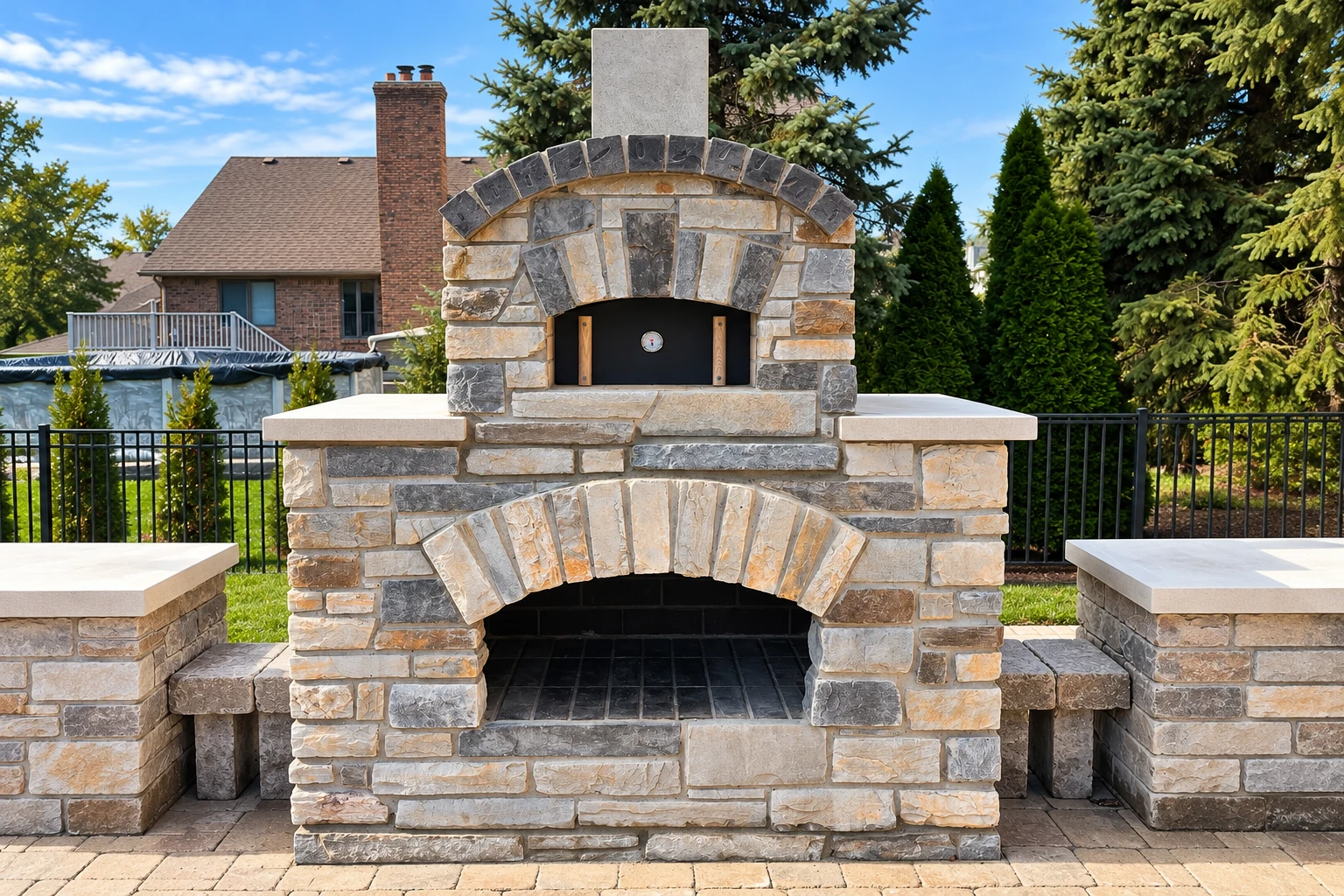
Fireplace installation in Columbia usually means fitting an insert, a heater that works a lot like a wood stove, inside the firebox of the fireplace you already have, so the room gets steady heat instead of losing it up the chimney.
Most folks who call us have an old open fireplace that looks nice and heats poorly, or a metal fireplace that came with the house. What moves the price most is what's already at the hearth, because a gas stub and an outlet close by mean far less work than running a gas line and a circuit across the house, and that's usually why two gas insert bids can be far apart. The fuel you pick and any surround work move the price and the schedule too, and the estimate I write after looking at your fireplace gives you your own figure. Before work starts, we check which office covers your address and take care of any permit paperwork the job calls for.
I come out myself to see your fireplace and write the estimate, because what's already there decides what fits, and I'd rather point you to a simple insert than sell you a bigger job.
A lead mason runs the crew on site, and I stop by to check the work and do the final walkthrough with you, so the person who quoted it sees it finished.
We've been laying brick, block and stone since 2013, and any hearth or surround work we add is set to look like it was always part of your house.
I start with the fireplace you already have, brick firebox or factory-built metal box, because that decides which inserts will fit, and then I help you pick a fuel and an insert built for it. Our crew sets the unit, runs the vent and finishes the hearth. On gas units, one vent maker's instructions run the unit and its vent straight to the outside and leave a chimney that already serves another fuel-burning appliance to that appliance, so the gas unit gets its own vent path. Before anything gets lit, we check the clearances around the unit and how the vent runs, because those are the things you can't see once the surround is done.
The fireplace wall often gets some work too. If the old surround looks tired, we can face it with stone veneer, thin stone set over the wall so it reads as solid stone, and where you want a raised hearth or a new fireplace wall with nothing to build from, our crew lays concrete block walls as the core before brick or stone goes on the face.
An insert sits inside the brick firebox you already have, so you keep the hearth and mantel you like and get a real heater instead of a draft up the chimney.
One maker's venting guide has a wood insert vented through a new flexible stainless steel liner, a metal tube run up the old chimney to the cap, so plan on liner work.
If the firebox or hearth has loose brick or worn mortar joints, we repair the brick first so the insert sits in sound masonry, matched to what's already there.
Missouri's fire safety guidance says to keep anything that can burn at least three feet from a fireplace, furniture, drapes and electronics included, so we talk through where your couch and TV will sit.
Send the form and we'll get back to you within one business day to set a time. I come out, look at your fireplace and write a free estimate, with no pressure and no obligation.
Say whether it's a brick firebox or a metal factory-built unit, because that decides which inserts can fit and tells me what to look for when I come out.
Gas, wood or pellet is fine, and so is not sure yet, because I'd rather talk it through standing at your fireplace than guess at it over the phone.
Let us know if there's a gas stub or an outlet close by, since that's the biggest swing in how much work the job takes.
Use these photos to think about hearths, brick and stone surrounds and insert styles, then we can talk through what suits your room.
Here's what people ask me most when they're thinking about an insert, from cost to which fireplaces can take one.
An installed gas fireplace insert usually costs about $2,500 to $8,000 per job across the US, so treat that as a planning number and not our price. Where yours lands depends mostly on how far gas and power have to reach the hearth. Your own figure comes from the estimate I write after looking at your fireplace.
Usually, as long as the insert is designed and tested for that specific unit. A factory-built fireplace, the metal box some call zero-clearance, can't take just any insert, and the matched one is what makes it more efficient and less polluting. When I come out, I'll look for the maker and model so we know which inserts are built for it.
No, an open wood fireplace is a very inefficient way to heat a home, because drafts pull warm air up the chimney and leave other rooms cooler. For more heat with less smoke, EPA guidance points owners to gas, pellet or EPA-certified wood inserts. I'll help you weigh which fuel fits how you use the room.
Yes. EPA guidance warns that installation mistakes by a non-professional may not be visible and may only show up as a house fire. For wood-burning units, that guidance has a trained installer check clearances from anything that can burn, floor protection and how the unit and vent fit together. We're licensed and insured, and I check our crew's work myself.
Fire officials recommend a professional inspection once a year for a wood-burning fireplace or insert, along with its chimney and vent, to keep it safe and working. A yearly look catches small problems while they're still small. If the masonry needs attention, our chimney repair work is done to match the brick you already have.
Call (573) 530-1031 or send the form from Columbia, Jefferson City, Fulton, Moberly, Boonville or nearby, and I'll come look at your fireplace.