
Older brick homes
Most of our tuckpointing calls come from older brick houses, where the joints on the side that catches the most rain and wind wear out long before the rest of the wall.
Crumbling or gapped mortar lets rain into your walls. We cut out the failed joints and refill them to match what's there.
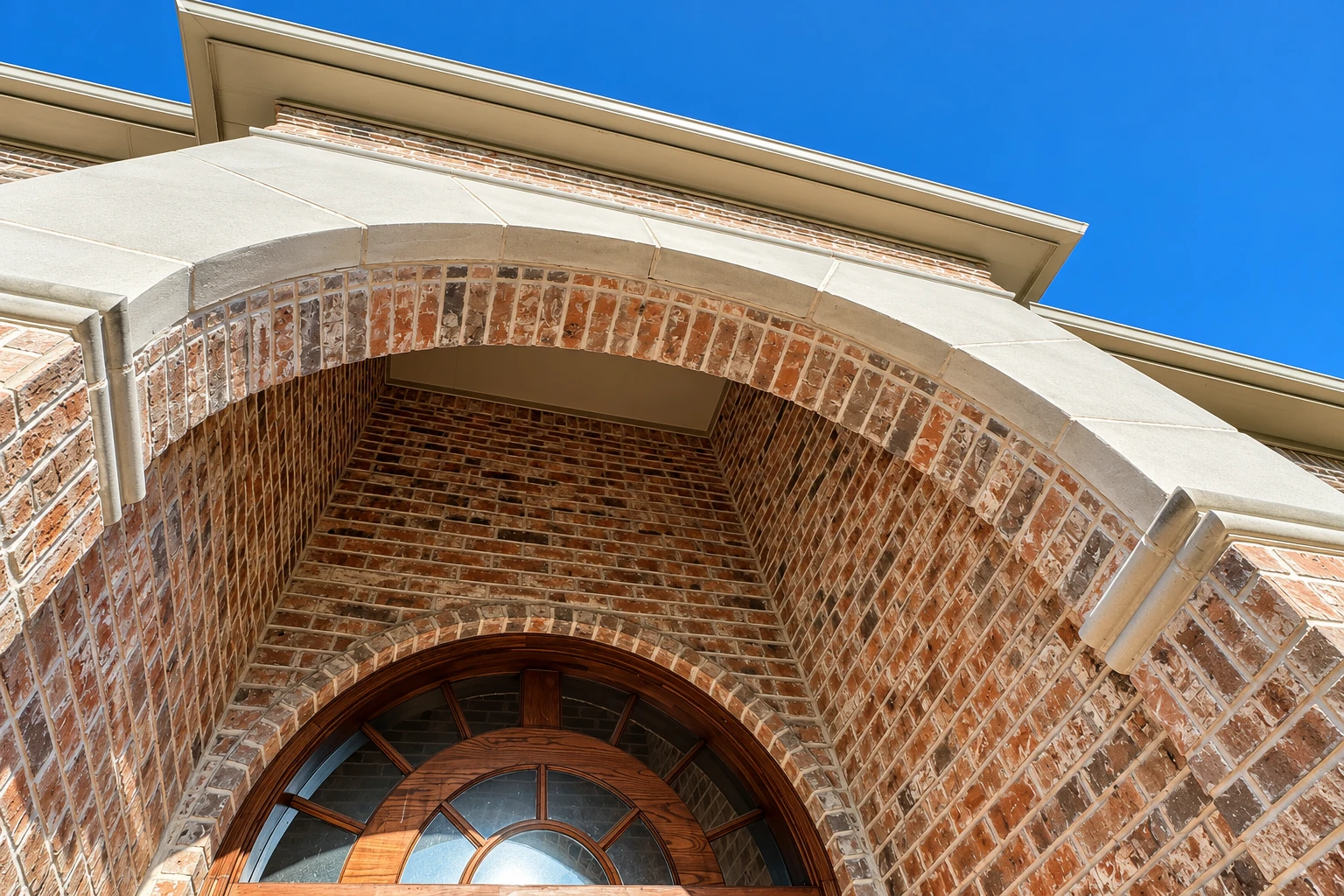
Tuckpointing, also called repointing, means cutting out worn mortar joints in your brick and filling them with fresh mortar. At Blockworks Columbia Concrete and Masonry, we do it for houses in Columbia, MO and the cities around it. Worn and cracked joints are where water most often gets into brickwork, and fixing them is one of the most lasting ways to keep it out.
Most folks call me after they spot sandy mortar on a windowsill or a joint they can poke a key into, and they want to know if it's a little job or a big one. The price mostly turns on how many joints have failed, since this is slow labor done one joint at a time, and on how high the wall goes and how easy it is to reach. The schedule turns on the weather, because mortar needs mild temperatures to set right. I'll give you your own number once I've looked at the wall in person.
I want to know why a joint failed before we touch it, whether it's water off a bad gutter or just age, because new mortar over a cause nobody fixed fails all over again.
If a few joints on one wall are the trouble, I'll tell you so and price just that, instead of selling you a whole-house job your brick doesn't need.
We match the color, texture and shape of your old mortar joints as closely as we can, so the repair looks like it's been part of your house all along.
I start by walking the wall with you, marking which joints have actually failed and looking for why, like a gutter dumping water on one corner. We cut out just those joints and leave sound original mortar right where it is, because good old joints do a better job than new ones and there's no reason to grind them out. We take the old mortar out carefully so the brick edges don't get chipped, mix new mortar to suit your brick and match its color, then pack the joints full and tool them to the same shape as the ones around them. Last, we brush the brick clean so no smeared mortar is left on the face.
A wall with worn joints often has a few cracked or flaking bricks too, and we can swap those out with brick repair on the same visit so the whole face gets fixed at once. If you'd like the ground out front to go with the house, our driveway pavers come in brick tones that sit well beside an older home.
Most of our tuckpointing calls come from older brick houses, where the joints on the side that catches the most rain and wind wear out long before the rest of the wall.
A chimney takes weather on every side with nothing sheltering it, so its joints often go first, and loose mortar up there lets water run down into the house.
When paint bubbles or plaster stains on an inside wall, worn joints are often where the water gets in, so I check the mortar before anybody starts blaming the brick.
A freestanding brick wall gets rained on from both sides and the top, so its joints wear faster, and repointing the bad stretches keeps water from working into the middle.
Send the form and we'll get back to you within one business day to set a time. I'll come out, look over your joints and give you a free estimate on site, with no obligation.
I look at your joints and write the estimate myself, so the person pricing the job is the same one who figured out what your wall actually needs.
A lead mason runs the work on site day to day, and I stop by while it's going to check the joints and make sure they match the old ones.
When the joints are done, I walk the wall with you before we call the job finished, and our work is satisfaction guaranteed.
These photos show joint shapes, mortar colors and brick and paver patterns you can point to when we talk about your house.
Here are straight answers to what Columbia homeowners ask most about worn mortar, new joints and when to schedule the work.
Your brick likely needs tuckpointing if the mortar has worn back more than 1/4 inch from the brick face, crumbles when you rub it, or shows gaps, hairline cracks or cracks between brick and mortar. Look up close, because worn joints are easy to miss from the driveway.
Mortar joints usually last more than 25 years, depending on how much weather the wall takes and what went into the mortar, while the brick itself can last well over 100 years. So on a brick house, repointing some joints now and then is normal upkeep to plan for, not a sign something's badly wrong.
New mortar should match your old mortar's strength or be weaker, so it isn't harder than what's already in the wall. Stronger mortar puts the load on a thin strip at the brick edges, and the brick face can spall, or flake off, which ruins that brick for good. That's why I figure out what's in your wall before we mix anything.
Usually not. A lab test on a sample of your old mortar can pin down the mix, but it adds cost and mostly makes sense for historic buildings that have to closely match what's there. Columbia has buildings on the National Register and several historic districts, and The District has design guidelines of its own, so if your house sits in one, ask the city what applies.
The best time is spring through fall, after the freezing nights are done. At Columbia's airport station, there's about an even chance of a 32°F night after April 9 in spring and before October 23 in fall, so that's the stretch to plan around. One mortar maker's guide says to work only between 40°F and 95°F, with it staying there at least five weeks after.
Ask to see repointing jobs a mason has done, or have them lay a sample on a hidden part of your wall, because a great bricklayer isn't always a good repointer. It's fussy work of its own. We're licensed and insured, we've been in business since 2013, and you're welcome to ask us those same questions.
Close-up photos of your crumbling or cracked joints let me see the wall before I visit. Call (573) 530-1031 or use the form.