Widening or adding a parking pad
Pavers make it easy to add a strip along one side or a pad beside the garage, and we build the same packed base under the new section so it carries cars like the rest.
Cracked or sinking driveway, or just tired of plain concrete? We dig, pack and set a paver driveway that sits flat on a solid base.
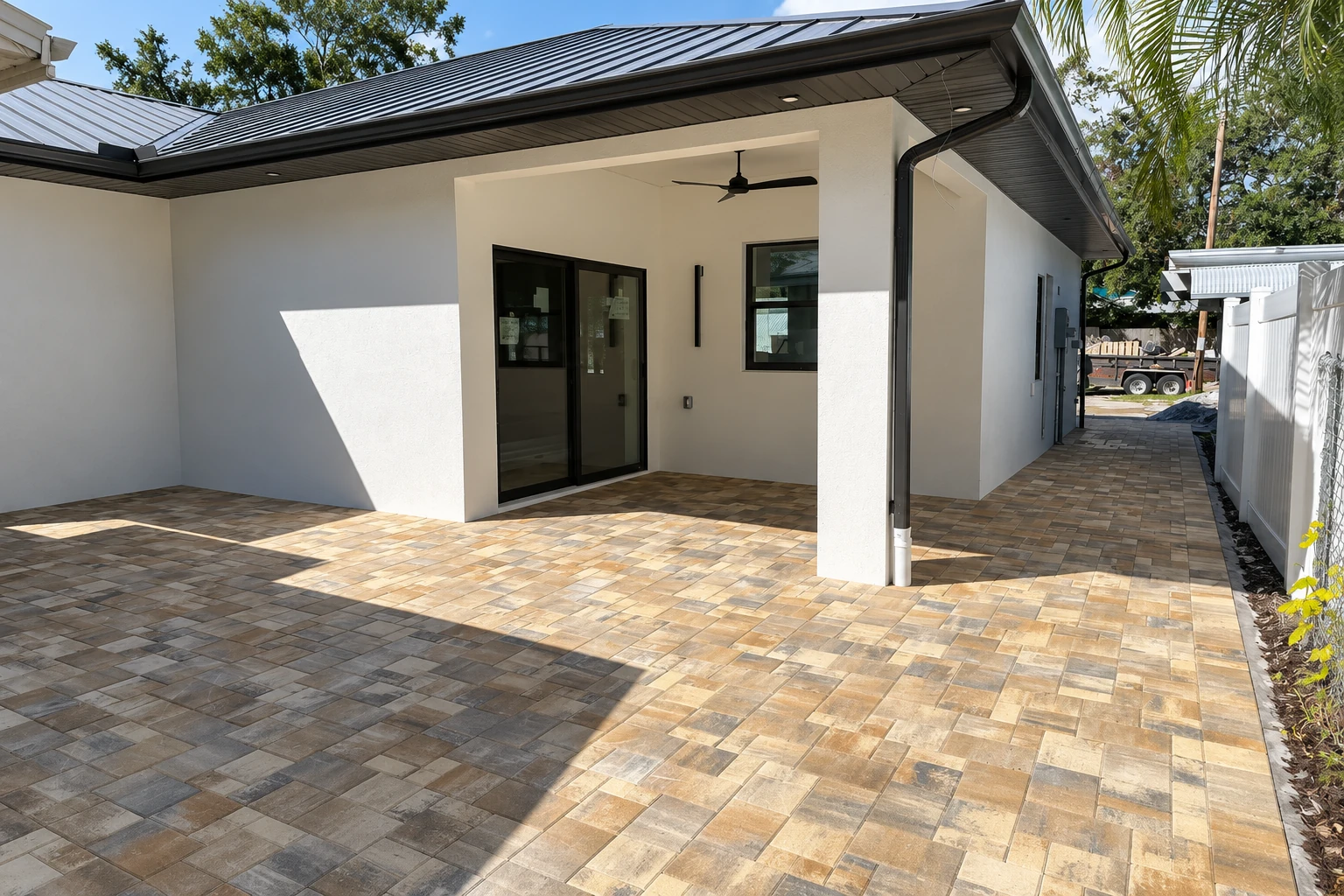
A paver driveway in Columbia is concrete pavers set on a thin bed of sand over a packed gravel base and packed soil, and when the base under it is built right, you get a good-looking driveway that carries your cars without the cracks an old slab gets.
Most folks call us when an old concrete or asphalt driveway has cracked, heaved or sunk, or when they want something better looking in front of the house. The price moves with the size in square feet, whether the old driveway has to be torn out and hauled off, how deep the base needs to go and which pavers you pick, and the schedule mostly turns on the weather. I come out, measure and look at your soil, so the number you get is for your driveway and not a guess.
If your old driveway sank or cracked, I look for why before we price the new one, because a new driveway laid over the same soft spot usually sinks right along with it.
I come out myself to look at the driveway, see where water runs and write the estimate, so the person pricing your job is the one who answers for it later.
I want the new driveway to look like it belongs, so we talk through paver color, pattern and border against your brick, stone or siding before anything gets ordered.
Most of the real work on a paver driveway goes into the base you'll never see, so I'll tell you how deep we plan to dig, and you can line our bid up against anyone else's. Our crew marks out the driveway, tears out and hauls off any old one, then digs down and packs the soil so the base has something firm to sit on. We lay the gravel base in layers and pack each one, because a thick base packed all at once tends to settle later, then spread a thin, even bed of sand on top. The pavers go down in your pattern, we cut them in along the edges and set an edge restraint, a buried border that keeps them from creeping outward, and then we pack the pavers, sweep sand into the joints and pack them again so the sand locks everything together. My lead mason runs the crew through all of it, I stop by to check the work as it goes, and once we've cleaned up I walk the finished driveway with you.
A driveway rarely stands on its own. If yours cuts into a slope or sits above the yard, the soil along that edge needs holding back, and that's where retaining wall construction comes in. If it leads up to an older brick house with worn joints or tired steps, our masonry restoration work brings the house up to match the new driveway out front.
Pavers make it easy to add a strip along one side or a pad beside the garage, and we build the same packed base under the new section so it carries cars like the rest.
Some folks only want pavers at the apron by the street or the stretch in front of the garage, which gets you the look on a smaller budget and leaves room to add more later.
If a water or gas line under the driveway needs work someday, or a spot in the base sinks, the same pavers can come up, the fix gets made underneath and they go right back down.
Permeable pavers work for driveways too, letting rain drain down through the joints, but federal highway guidance says they generally aren't used where groundwater sits within 2 feet of the pavement's bottom.
Send the form and we'll get back to you within one business day to set a time. I'll come out, measure the driveway and write your estimate, free and with no obligation.
Pace off the length and width or take a guess at the square feet, and tell us if an old driveway has to come out, so I show up with the right questions.
If you've seen puddles, soft spots or a wet corner after a rain, mention it in the form, because that's the first place I'll look when I come out to your house.
Our hours run 6 AM to 9 PM on weekdays and 8 AM to 10 PM on weekends, so you can call (573) 530-1031 after work if that's easier for you.
Look through these example pavers, borders and patterns, then tell us what you like so we can talk colors, layouts and edging on site.
Here's what Columbia homeowners usually ask about paver driveways, from what they cost to how to keep them looking right through winter.
A driveway of sand-based concrete pavers in Columbia usually costs about $14 to $17 per square foot, not counting tearing out an old driveway. That figure assumes a 4-inch packed gravel base and a 1-inch sand bed, so a deeper base or a tear-out adds to it. I'll measure yours and give you your own number on site.
Trade guidance calls for at least 6 inches of gravel base under a home driveway on well-drained soil, and at least 2 to 4 inches more in colder climates where soil stays wet or is weak. That's deeper than the 4-inch base in the Columbia price above, so ask every bidder how deep they plan to dig.
Pavers can go in during a dry stretch once the base isn't frozen. The industry's guide specification calls for laying the sand and pavers outside heavy rain or snowfall and only over base materials that aren't frozen, so it's worth planning your driveway for a dry spell after the ground has thawed.
Ask whether they hold a current certificate from the Interlocking Concrete Pavement Institute's Certified Concrete Paver Installer program, because the industry's guide specification calls for an installer who does. Ask whether they're licensed and insured, too. We're licensed and insured, and our promise is short. Satisfaction guaranteed.
We check that on every driveway, because the answer turns on which office covers your address. The Missouri Department of Natural Resources describes its stormwater program as covering land disturbance of one acre or more, far bigger than a home driveway, and before work starts we take care of any permit paperwork your job calls for.
Sweep it in spring to clear leftover deicer and winter sand, and in fall for dirt and leaves, using a blower or power washer only if the joint sand stays put. The care guide says rock salt is the least damaging deicer for concrete pavers, and to top up joint sand once it drops more than 1/2 inch, without polymeric sand.
We work in Columbia, Jefferson City, Fulton, Moberly, Boonville and the cities around them, so call (573) 530-1031 or use the form to start planning.