
Retaining walls on a slope
A stone retaining wall holds back a slope or squares up a raised bed, and it can be dry stacked or mortared. Height, drainage and how much your ground moves decide which way I'd go.
Mortar crumbling out of your stone wall, or a slope to hold back? We build and repair stone walls that fit your house.
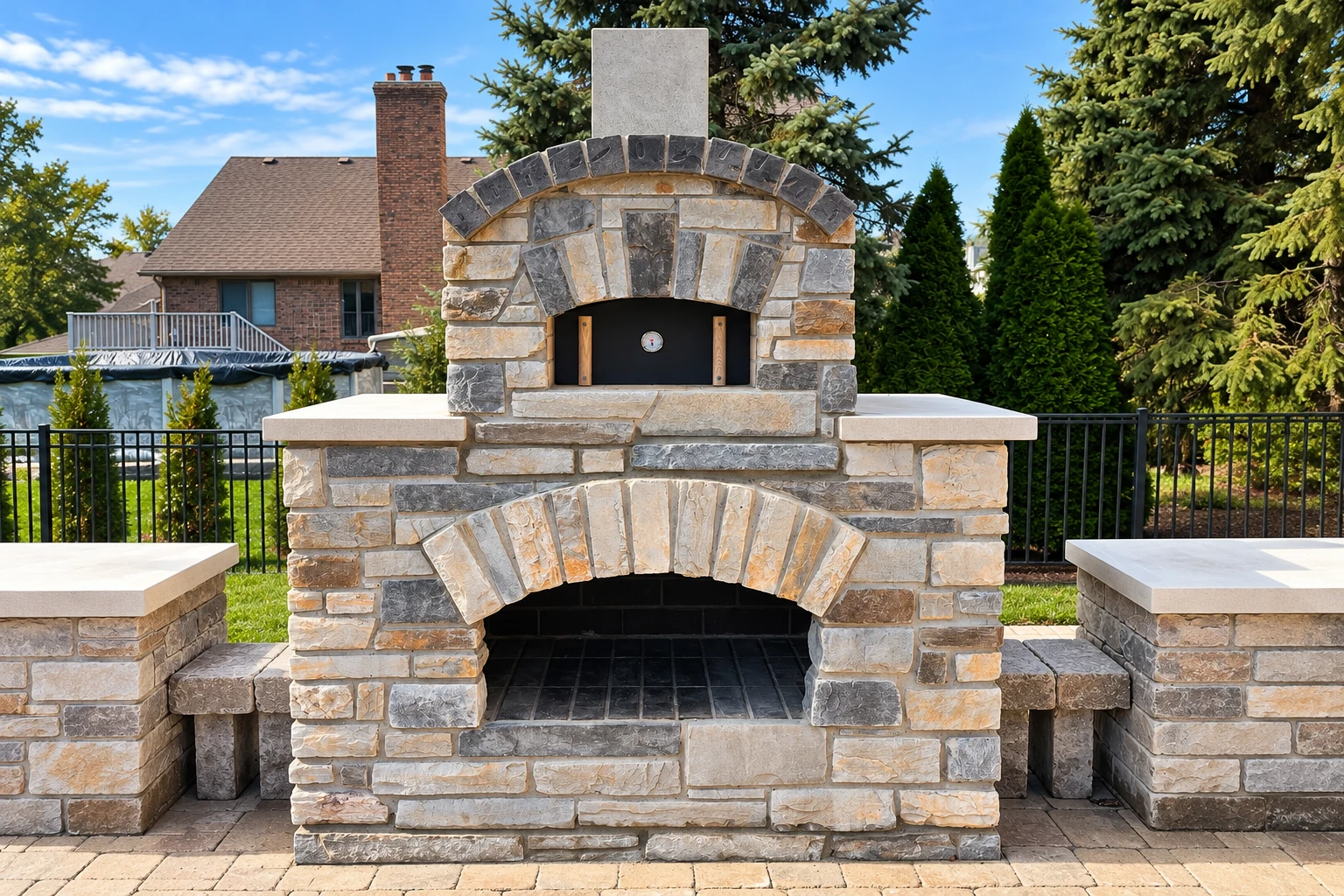
Stone masonry in Columbia covers building new stone walls and repairing old ones. Most repairs start at the mortar joints, because that's where a stone wall wears first, and the usual fix is repointing, where we clear the worn mortar out of the joints and pack in new.
Maybe it's a stone foundation or garden wall with joints going sandy and a few stones working loose, or a slope you'd like held back with a new wall. The price moves with the kind of wall, how long and tall it is, the stone you pick, how easy the site is to reach and, on a repair, how much old mortar has to come out, while the schedule mostly turns on the weather and getting the right stone delivered. I come out, look at the wall and write the estimate myself, so you get a number for your wall and not a guess.
I want to know why a wall cracked or loosened before anybody picks up a trowel, because a repair that misses the cause comes back. If a small fix will do, I'll say so.
Most of our work is repair, so we're used to matching stone size, color and joint finish to what's already there, and the new work should look like it belongs on your house.
We've been in business since 2013, we're licensed and insured, and our work is satisfaction guaranteed. I write your estimate and do the final walkthrough with you once the wall is done.
I start by looking at the wall and the ground around it, because a stone wall usually gives out for a reason, like water or moving soil, and patching over that just buys you another round of cracks. On a new wall, we help you choose between a dry stacked wall and a mortared one on a footing, the concrete base poured under it, and we steer you toward stone that's held up well around here. On an old stone wall, we find out what mortar is already in it before we patch anything, so the new joints work with the old stone instead of fighting it. Then our crew digs out, sets the base or footing, lays and fits the stone, finishes the joints and cleans up, with our lead mason running the site and me stopping by to check the work.
Stone and brick work overlap a lot. If your house is brick with tired joints, brick pointing is the same idea as repointing stone. When a stone or block foundation has cracked or shifted, that's foundation repair, and we deal with what moved before we rebuild anything on top of it.
A stone retaining wall holds back a slope or squares up a raised bed, and it can be dry stacked or mortared. Height, drainage and how much your ground moves decide which way I'd go.
Manufactured stone veneer is cast from cement, lightweight aggregates and color pigments to look like natural stone, then set in mortar over a backing wall, so you get the stone look as a facing.
Not every natural stone is suggested for outdoor use, so the stone industry's guide advises picking stone with a track record in your local weather and asking the supplier to certify it suits local conditions.
Rain soaks into stone walls, splashes up onto them and soaks back in from the ground. Preservation guidance for older stone buildings says good practice always includes steering water away before it gets in.
Send the form and we'll get back to you within one business day to set a time for me to come out, look at the wall and write your free estimate, with no obligation.
If you can, attach a few phone photos of the wall and the ground around it, so I already have an idea of what's going on before I pull into your driveway.
A rough length and height, plus how old the wall or house is, tells me whether we're likely talking about a new wall, a patch or a careful repair on old mortar.
Tell us whether you're inside Columbia city limits, since that changes which office we check with. We also work in Jefferson City, Fulton, Moberly, Boonville and plenty of cities around them.
Look through dry stacked and mortared walls, stone veneer and joint finishes, and bring the ones you like to your estimate.
Here's what people usually ask me about stone walls, old mortar and the ground here before they decide on a job.
Either can work, and the big difference is what's underneath. A dry wall is stacked stone with no mortar and holds by the stacking alone, while a mortared stone wall sits on a foundation, which adds digging and concrete to the job. I'll look at your slope and the look you want, then tell you which one I'd build and why.
The mortar the wall was built with should guide the repair, because a harder mix can do real harm. Preservation guidance for older buildings says repointing with harder modern mortars, such as Portland cement, could make the stone soak up moisture and fail, which damages the wall itself and not just its looks. If your wall was laid in lime mortar, ask which mortar any contractor plans to use.
A big reason is the clay. Much of Boone County's soil is expansive clay that swells as it takes on water and shrinks as it dries, which can lift and drop a foundation unevenly and open stair-step cracks in the mortar. A mortared stone wall sits on a foundation in that same clay, and one guide reports frost 24 to 32 inches deep in Columbia.
Skip acid cleaners. Preservation guidance for older limestone buildings recommends against acidic cleaners on acid-sensitive stone like limestone, and it says highly alkaline products do harm as well. If you aren't sure what's safe on your wall, give us a call before you buy a cleaner off the shelf, and I'll take a look at the stone.
If you're inside Columbia city limits, it's the City of Columbia's own office. Outside the city, Boone County's Inspections Division handles building inspections. Before work starts, we check which office covers your address and take care of any permit paperwork the job calls for, so you aren't sorting that out on your own.
We take calls until 9 PM weekdays and 10 PM weekends, so call (573) 530-1031 or send the form when it suits you.