
Along a property line
A brick boundary wall marks your line without the staining and board swapping a wood fence asks for, and we set its height by what you want to see over it.
Planning a garden or boundary wall and worried about frost cracks? We build brick walls designed to keep water and frost from wearing them down.
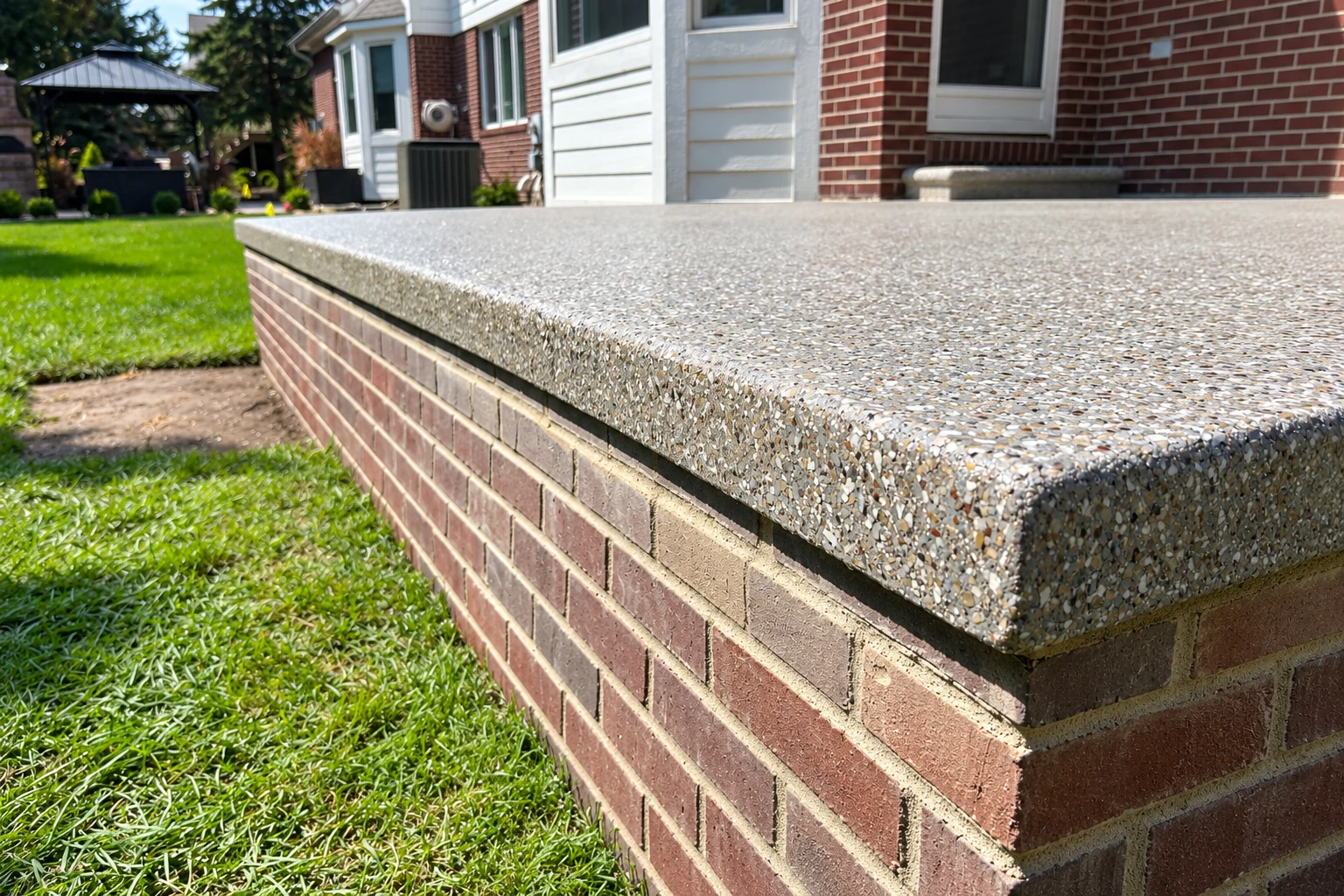
Brick wall installation in Columbia, MO means building a freestanding garden or boundary wall from the footing up, so you end up with a solid brick wall that marks your space and is built to take Missouri freezes and summer storms.
Most calls I get for a new wall are about marking a property line, framing a patio or garden, or hiding something you'd rather not look at. The price mostly comes down to the wall's length and height, whether it needs piers or extra thickness to stand tall, the brick and cap you pick, and how easy it is to get a mixer and pallets to the spot. The schedule turns on the weather, because we don't want fresh mortar freezing before it sets, and on how soon your brick is in stock. When I come out to look, I'll write your estimate with the figure for your own wall.
I come out myself to look at the ground, the slope and where water runs, because a wall built without knowing those things is the kind that cracks a few winters later.
I want new brick to sit right next to your house, so we talk through color, size and joint style against your existing brick or trim before anything gets ordered.
We've been doing brick, block and stone work around Columbia since 2013, and we're licensed and insured, so you know who's working in your yard. Satisfaction guaranteed.
We pick brick made to take the weather and top the wall with a cap that sheds water, because keeping water out of the brick is most of what makes a garden wall last. Once I've written up the job, our lead mason runs the crew. They stake out the line, dig down and set the footing, then lay the brick, pulling from several cubes, which is what brick comes stacked in, so small color shifts spread out instead of showing up as stripes. They tool the joints concave or V-shaped, a profile that lets rain run off instead of sitting in the joint, then set the cap and clean up the site. I stop by to check the work along the way, and we walk the finished wall together before we call it done.
Some walls want a little more than brick. A stone masonry cap, stone piers or a stone base can tie a new wall to a stone house or patio, and we build those too. Down the road, the joints are usually the first thing to wear, and brick pointing, raking out tired mortar and packing in fresh, keeps water out long before the brick itself is in trouble. If your wall will hold back soil or cover the side of a building, that's a different job, so tell us on the form and I'll talk it through with you.
A brick boundary wall marks your line without the staining and board swapping a wood fence asks for, and we set its height by what you want to see over it.
When paving runs up to the wall, it should slope away where it can, or get a drainage strip, a gravel channel along the base, so the bottom rows stay drier.
A low garden wall frames beds and lawn and gives you somewhere to sit, and it stays freestanding, so it isn't holding back dirt the way a retaining wall does.
A short wall can screen an AC unit, trash cans or a utility box, and brick shrugs off mowers, kids and dogs a whole lot better than lattice or shrubs.
Send the form and we'll get back to you within one business day to set a time. I'll come out, look at the spot and write your estimate, free and with no obligation.
A rough length, height and where the wall will go are plenty to start, so I show up with a sense of the footing and how much brick we're talking about.
Let us know whether your property sits inside Columbia city limits, since that tells us which office handles building inspections for your address.
If the wall will hold back a slope or cover part of a building, mention it on the form, because that's a retaining wall or veneer job and we plan it differently.
Examples of brick colors, cap styles, piers and joint finishes we can talk through when we plan the shape of your wall.
Straight answers to what Columbia homeowners ask most when they're planning a new brick garden or boundary wall.
Most cracking starts with water. Brick that soaks up too much of it changes size, and when that water freezes and thaws over and over, the brick can crack, chip or break apart. That's why keeping water out of the wall matters more than almost anything else, and why we put so much care into the brick, the joints and the cap.
You want brick made to stand up to long-term weather and frost, not just brick that looks right on the pallet. Ask any mason which brick they'd use for severe exposure, since that choice shapes how long the wall lasts. When I come out, I'll show you options that suit both the weather and your house.
A thin brick wall can only go so tall before it needs a thicker base, piers that stick out from the face, or a zigzag or staggered layout to stay steady. Brick industry guidance from the UK says thinner walls reach a point where wind and other side forces start to affect how they stand, so we settle the shape together for the height you want.
It needs to sit below the frost, and one frost line guide reports frost reaching 24 to 32 in deep around Columbia and Jefferson City. Boone County's soil mostly rates high for shrink-swell, so it swells when wet and shrinks as it dries, and the footing has to keep the wall from moving with it. I set the depth once I've seen your ground.
Skip film-forming or acrylic sealers, and if you want extra protection, a penetrating water repellent is the kind that can help. It soaks in rather than coating the face and can raise moisture resistance on a wall one brick thick, but it has to be reapplied every so often. A good cap and well-tooled joints still do most of the work.
Inside Columbia city limits, you contact the City of Columbia's office, and outside city limits it's the Boone County Inspections Division. Before work starts, we check which office covers your address, so tell us on the form whether you're inside the city limits.
Call (573) 530-1031 or send the form with a rough sketch, and I'll bring brick and cap ideas to the first visit.